•  

US: Autumn Colors Brighten Hillside Roads in Tennessee

Filmed between Bristol and Mountain City, Tennessee, on October 19, 2025, this video captures vivid reds, oranges, and yellows spreading across the hillsides as autumn deepens, painting the landscape in rich seasonal hues.

  •  
Illustration - The Alps in Summer

Illustration - The Alps in Summer

FRANCE, HAUTES-ALPES (05) ORCEYRETTE LAKE IN AUTUMN WITH GOLDEN LARCH TREES Photo by Francois Roux/Only France/ABACAPRESS.COM

  •  
Illustration - The Alps in Summer

Illustration - The Alps in Summer

FRANCE, HAUTES-ALPES (05) ORCEYRETTE LAKE IN AUTUMN WITH GOLDEN LARCH TREES. Photo by Francois Roux/Only France/ABACAPRESS.COM

  •  
Preserving Tradition And Innovating Duck Culture - Bejing

Preserving Tradition And Innovating Duck Culture - Bejing

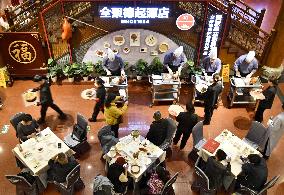
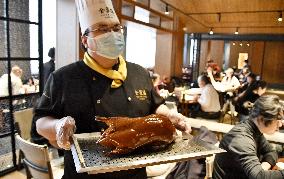
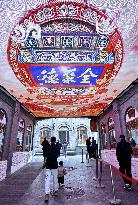
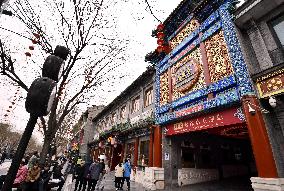
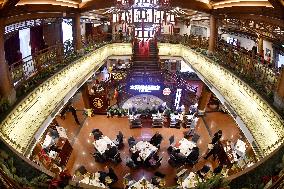
B Customers have meals at the first-ever store of Quanjude on the Qianmen Street in Beijing, capital of China, March 25, 2025. Peking Duck, a representative cuisine of Beijing, has won popularity across the world for its golden, crispy skin and juicy, flavorful meat. Set up by Yang Quanren in 1864 in Beijing, "Quanjude", a time-honored brand for Peking duck, has become a must-go for visitors from both home and abroad. In 2008, Quanjude's craft of making Peking Duck was listed in the second batch of national intangible cultural heritages. The cooking craft of Peking Duck, which has been passed down for seven generations in Quanjude, is mainly used in two steps, preparation and roasting. To ensure the quality of its duck, Quanjude only chooses a type of local ducks which are fed and raised in a special way so that the proportion of the fat in the duck meat is strictly under control. During the roasting procedure, Quanjude uses wood from hard fruit trees and open fire to get a better taste. Meanwhile, the chef w

  •  
Preserving Tradition And Innovating Duck Culture - Bejing

Preserving Tradition And Innovating Duck Culture - Bejing

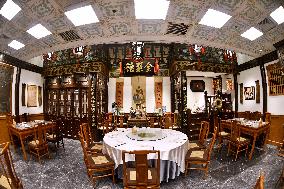
B This photo taken on March 25, 2025 shows the replica of an old Quanjude store at its first-ever store on the Qianmen Street in Beijing, capital of China, March 25, 2025. Peking Duck, a representative cuisine of Beijing, has won popularity across the world for its golden, crispy skin and juicy, flavorful meat. Set up by Yang Quanren in 1864 in Beijing, "Quanjude", a time-honored brand for Peking duck, has become a must-go for visitors from both home and abroad. In 2008, Quanjude's craft of making Peking Duck was listed in the second batch of national intangible cultural heritages. The cooking craft of Peking Duck, which has been passed down for seven generations in Quanjude, is mainly used in two steps, preparation and roasting. To ensure the quality of its duck, Quanjude only chooses a type of local ducks which are fed and raised in a special way so that the proportion of the fat in the duck meat is strictly under control. During the roasting procedure, Quanjude uses wood from hard fruit trees and open fire

  •  
Preserving Tradition And Innovating Duck Culture - Bejing

Preserving Tradition And Innovating Duck Culture - Bejing

B A chef learns the dish presentation at the Hepingmen store of Quanjude in Beijing, capital of China, March 13, 2025. Peking Duck, a representative cuisine of Beijing, has won popularity across the world for its golden, crispy skin and juicy, flavorful meat. Set up by Yang Quanren in 1864 in Beijing, "Quanjude", a time-honored brand for Peking duck, has become a must-go for visitors from both home and abroad. In 2008, Quanjude's craft of making Peking Duck was listed in the second batch of national intangible cultural heritages. The cooking craft of Peking Duck, which has been passed down for seven generations in Quanjude, is mainly used in two steps, preparation and roasting. To ensure the quality of its duck, Quanjude only chooses a type of local ducks which are fed and raised in a special way so that the proportion of the fat in the duck meat is strictly under control. During the roasting procedure, Quanjude uses wood from hard fruit trees and open fire to get a better taste. Meanwhile, the chef will also

  •  
Preserving Tradition And Innovating Duck Culture - Bejing

Preserving Tradition And Innovating Duck Culture - Bejing

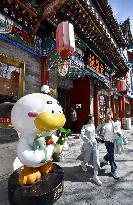
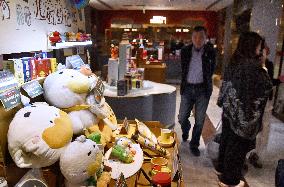
B A mascot of Quanjude is displayed at the entrance of an experience store of Quanjude on the Qianmen Street in Beijing, capital of China, March 25, 2025. Peking Duck, a representative cuisine of Beijing, has won popularity across the world for its golden, crispy skin and juicy, flavorful meat. Set up by Yang Quanren in 1864 in Beijing, "Quanjude", a time-honored brand for Peking duck, has become a must-go for visitors from both home and abroad. In 2008, Quanjude's craft of making Peking Duck was listed in the second batch of national intangible cultural heritages. The cooking craft of Peking Duck, which has been passed down for seven generations in Quanjude, is mainly used in two steps, preparation and roasting. To ensure the quality of its duck, Quanjude only chooses a type of local ducks which are fed and raised in a special way so that the proportion of the fat in the duck meat is strictly under control. During the roasting procedure, Quanjude uses wood from hard fruit trees and open fire to get a better

  •  
Preserving Tradition And Innovating Duck Culture - Bejing

Preserving Tradition And Innovating Duck Culture - Bejing

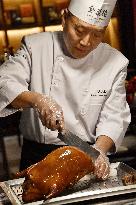
B A chef prepares to slice Peking Duck for customers at the Hepingmen store of Quanjude in Beijing, capital of China, March 13, 2025. Peking Duck, a representative cuisine of Beijing, has won popularity across the world for its golden, crispy skin and juicy, flavorful meat. Set up by Yang Quanren in 1864 in Beijing, "Quanjude", a time-honored brand for Peking duck, has become a must-go for visitors from both home and abroad. In 2008, Quanjude's craft of making Peking Duck was listed in the second batch of national intangible cultural heritages. The cooking craft of Peking Duck, which has been passed down for seven generations in Quanjude, is mainly used in two steps, preparation and roasting. To ensure the quality of its duck, Quanjude only chooses a type of local ducks which are fed and raised in a special way so that the proportion of the fat in the duck meat is strictly under control. During the roasting procedure, Quanjude uses wood from hard fruit trees and open fire to get a better taste. Meanwhile, the

  •  
Preserving Tradition And Innovating Duck Culture - Bejing

Preserving Tradition And Innovating Duck Culture - Bejing

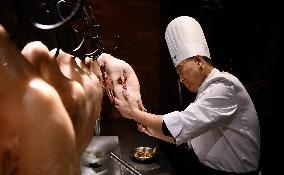
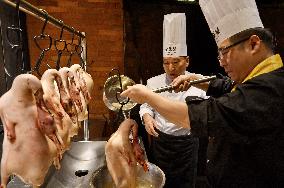
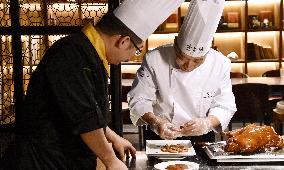
B Wu Yubo prepares the duck at the Hepingmen store of Quanjude in Beijing, capital of China, March 13, 2025. Peking Duck, a representative cuisine of Beijing, has won popularity across the world for its golden, crispy skin and juicy, flavorful meat. Set up by Yang Quanren in 1864 in Beijing, "Quanjude", a time-honored brand for Peking duck, has become a must-go for visitors from both home and abroad. In 2008, Quanjude's craft of making Peking Duck was listed in the second batch of national intangible cultural heritages. The cooking craft of Peking Duck, which has been passed down for seven generations in Quanjude, is mainly used in two steps, preparation and roasting. To ensure the quality of its duck, Quanjude only chooses a type of local ducks which are fed and raised in a special way so that the proportion of the fat in the duck meat is strictly under control. During the roasting procedure, Quanjude uses wood from hard fruit trees and open fire to get a better taste. Meanwhile, the chef will also use a lon

  •  
Preserving Tradition And Innovating Duck Culture - Bejing

Preserving Tradition And Innovating Duck Culture - Bejing

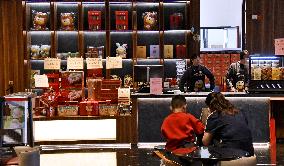
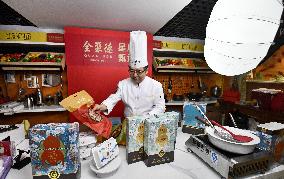
B Cultural creative products are displayed at the Hepingmen store of Quanjude in Beijing, capital of China, March 13, 2025. Peking Duck, a representative cuisine of Beijing, has won popularity across the world for its golden, crispy skin and juicy, flavorful meat. Set up by Yang Quanren in 1864 in Beijing, "Quanjude", a time-honored brand for Peking duck, has become a must-go for visitors from both home and abroad. In 2008, Quanjude's craft of making Peking Duck was listed in the second batch of national intangible cultural heritages. The cooking craft of Peking Duck, which has been passed down for seven generations in Quanjude, is mainly used in two steps, preparation and roasting. To ensure the quality of its duck, Quanjude only chooses a type of local ducks which are fed and raised in a special way so that the proportion of the fat in the duck meat is strictly under control. During the roasting procedure, Quanjude uses wood from hard fruit trees and open fire to get a better taste. Meanwhile, the chef will

  •  
Preserving Tradition And Innovating Duck Culture - Bejing

Preserving Tradition And Innovating Duck Culture - Bejing

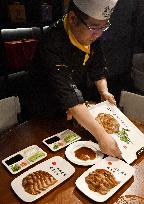
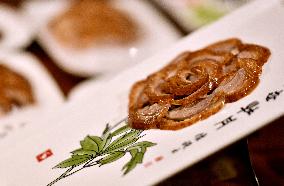
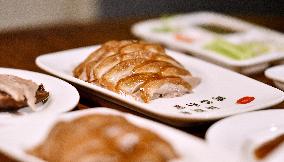
B A plate of sliced Peking Duck is displayed at the Hepingmen store of Quanjude in Beijing, capital of China, March 13, 2025. Peking Duck, a representative cuisine of Beijing, has won popularity across the world for its golden, crispy skin and juicy, flavorful meat. Set up by Yang Quanren in 1864 in Beijing, "Quanjude", a time-honored brand for Peking duck, has become a must-go for visitors from both home and abroad. In 2008, Quanjude's craft of making Peking Duck was listed in the second batch of national intangible cultural heritages. The cooking craft of Peking Duck, which has been passed down for seven generations in Quanjude, is mainly used in two steps, preparation and roasting. To ensure the quality of its duck, Quanjude only chooses a type of local ducks which are fed and raised in a special way so that the proportion of the fat in the duck meat is strictly under control. During the roasting procedure, Quanjude uses wood from hard fruit trees and open fire to get a better taste. Meanwhile, the chef wi

  •  
Preserving Tradition And Innovating Duck Culture - Bejing

Preserving Tradition And Innovating Duck Culture - Bejing

B People walk to the first-ever store of Quanjude on the Qianmen Street in Beijing, capital of China, March 14, 2025. Peking Duck, a representative cuisine of Beijing, has won popularity across the world for its golden, crispy skin and juicy, flavorful meat. Set up by Yang Quanren in 1864 in Beijing, "Quanjude", a time-honored brand for Peking duck, has become a must-go for visitors from both home and abroad. In 2008, Quanjude's craft of making Peking Duck was listed in the second batch of national intangible cultural heritages. The cooking craft of Peking Duck, which has been passed down for seven generations in Quanjude, is mainly used in two steps, preparation and roasting. To ensure the quality of its duck, Quanjude only chooses a type of local ducks which are fed and raised in a special way so that the proportion of the fat in the duck meat is strictly under control. During the roasting procedure, Quanjude uses wood from hard fruit trees and open fire to get a better taste. Meanwhile, the chef will also

  •  
Preserving Tradition And Innovating Duck Culture - Bejing

Preserving Tradition And Innovating Duck Culture - Bejing

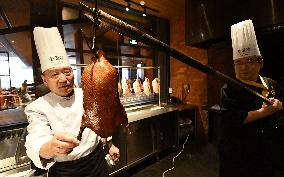
B Wu Yubo shows the skills of roasting ducks at the Hepingmen store of Quanjude in Beijing, capital of China, March 13, 2025. Peking Duck, a representative cuisine of Beijing, has won popularity across the world for its golden, crispy skin and juicy, flavorful meat. Set up by Yang Quanren in 1864 in Beijing, "Quanjude", a time-honored brand for Peking duck, has become a must-go for visitors from both home and abroad. In 2008, Quanjude's craft of making Peking Duck was listed in the second batch of national intangible cultural heritages. The cooking craft of Peking Duck, which has been passed down for seven generations in Quanjude, is mainly used in two steps, preparation and roasting. To ensure the quality of its duck, Quanjude only chooses a type of local ducks which are fed and raised in a special way so that the proportion of the fat in the duck meat is strictly under control. During the roasting procedure, Quanjude uses wood from hard fruit trees and open fire to get a better taste. Meanwhile, the chef wi

  •  
Preserving Tradition And Innovating Duck Culture - Bejing

Preserving Tradition And Innovating Duck Culture - Bejing

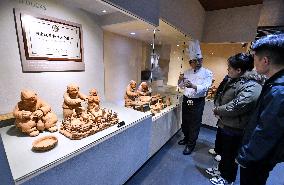
B People visit a museum of Quanjude at the Hepingmen store of Quanjude in Beijing, capital of China, March 13, 2025. Peking Duck, a representative cuisine of Beijing, has won popularity across the world for its golden, crispy skin and juicy, flavorful meat. Set up by Yang Quanren in 1864 in Beijing, "Quanjude", a time-honored brand for Peking duck, has become a must-go for visitors from both home and abroad. In 2008, Quanjude's craft of making Peking Duck was listed in the second batch of national intangible cultural heritages. The cooking craft of Peking Duck, which has been passed down for seven generations in Quanjude, is mainly used in two steps, preparation and roasting. To ensure the quality of its duck, Quanjude only chooses a type of local ducks which are fed and raised in a special way so that the proportion of the fat in the duck meat is strictly under control. During the roasting procedure, Quanjude uses wood from hard fruit trees and open fire to get a better taste. Meanwhile, the chef will also u

  •  
Preserving Tradition And Innovating Duck Culture - Bejing

Preserving Tradition And Innovating Duck Culture - Bejing

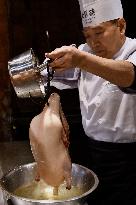
B Wu Yubo prepares a duck at the Hepingmen store of Quanjude in Beijing, capital of China, March 13, 2025. Peking Duck, a representative cuisine of Beijing, has won popularity across the world for its golden, crispy skin and juicy, flavorful meat. Set up by Yang Quanren in 1864 in Beijing, "Quanjude", a time-honored brand for Peking duck, has become a must-go for visitors from both home and abroad. In 2008, Quanjude's craft of making Peking Duck was listed in the second batch of national intangible cultural heritages. The cooking craft of Peking Duck, which has been passed down for seven generations in Quanjude, is mainly used in two steps, preparation and roasting. To ensure the quality of its duck, Quanjude only chooses a type of local ducks which are fed and raised in a special way so that the proportion of the fat in the duck meat is strictly under control. During the roasting procedure, Quanjude uses wood from hard fruit trees and open fire to get a better taste. Meanwhile, the chef will also use a long

  •  
Preserving Tradition And Innovating Duck Culture - Bejing

Preserving Tradition And Innovating Duck Culture - Bejing

B The first-ever store of Quanjude is seen on the Qianmen Street in Beijing, capital of China, March 14, 2025. Peking Duck, a representative cuisine of Beijing, has won popularity across the world for its golden, crispy skin and juicy, flavorful meat. Set up by Yang Quanren in 1864 in Beijing, "Quanjude", a time-honored brand for Peking duck, has become a must-go for visitors from both home and abroad. In 2008, Quanjude's craft of making Peking Duck was listed in the second batch of national intangible cultural heritages. The cooking craft of Peking Duck, which has been passed down for seven generations in Quanjude, is mainly used in two steps, preparation and roasting. To ensure the quality of its duck, Quanjude only chooses a type of local ducks which are fed and raised in a special way so that the proportion of the fat in the duck meat is strictly under control. During the roasting procedure, Quanjude uses wood from hard fruit trees and open fire to get a better taste. Meanwhile, the chef will also use a l

  •  
Preserving Tradition And Innovating Duck Culture - Bejing

Preserving Tradition And Innovating Duck Culture - Bejing

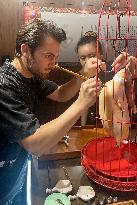
B Wu Yubo (L) teaches his apprentice to prepare ducks at the Hepingmen store of Quanjude in Beijing, capital of China, March 13, 2025. Peking Duck, a representative cuisine of Beijing, has won popularity across the world for its golden, crispy skin and juicy, flavorful meat. Set up by Yang Quanren in 1864 in Beijing, "Quanjude", a time-honored brand for Peking duck, has become a must-go for visitors from both home and abroad. In 2008, Quanjude's craft of making Peking Duck was listed in the second batch of national intangible cultural heritages. The cooking craft of Peking Duck, which has been passed down for seven generations in Quanjude, is mainly used in two steps, preparation and roasting. To ensure the quality of its duck, Quanjude only chooses a type of local ducks which are fed and raised in a special way so that the proportion of the fat in the duck meat is strictly under control. During the roasting procedure, Quanjude uses wood from hard fruit trees and open fire to get a better taste. Meanwhile, th

  •  
Preserving Tradition And Innovating Duck Culture - Bejing

Preserving Tradition And Innovating Duck Culture - Bejing

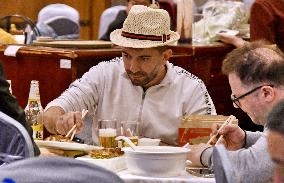
B A foreign guest eats Peking Duck at the first-ever store of Quanjude on the Qianmen Street in Beijing, capital of China, March 25, 2025. Peking Duck, a representative cuisine of Beijing, has won popularity across the world for its golden, crispy skin and juicy, flavorful meat. Set up by Yang Quanren in 1864 in Beijing, "Quanjude", a time-honored brand for Peking duck, has become a must-go for visitors from both home and abroad. In 2008, Quanjude's craft of making Peking Duck was listed in the second batch of national intangible cultural heritages. The cooking craft of Peking Duck, which has been passed down for seven generations in Quanjude, is mainly used in two steps, preparation and roasting. To ensure the quality of its duck, Quanjude only chooses a type of local ducks which are fed and raised in a special way so that the proportion of the fat in the duck meat is strictly under control. During the roasting procedure, Quanjude uses wood from hard fruit trees and open fire to get a better taste. Meanwhile

  •  
Preserving Tradition And Innovating Duck Culture - Bejing

Preserving Tradition And Innovating Duck Culture - Bejing

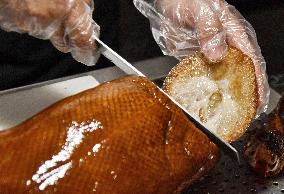
B Wu Yubo shows how to slice a duck at the Hepingmen store of Quanjude in Beijing, capital of China, March 13, 2025. Peking Duck, a representative cuisine of Beijing, has won popularity across the world for its golden, crispy skin and juicy, flavorful meat. Set up by Yang Quanren in 1864 in Beijing, "Quanjude", a time-honored brand for Peking duck, has become a must-go for visitors from both home and abroad. In 2008, Quanjude's craft of making Peking Duck was listed in the second batch of national intangible cultural heritages. The cooking craft of Peking Duck, which has been passed down for seven generations in Quanjude, is mainly used in two steps, preparation and roasting. To ensure the quality of its duck, Quanjude only chooses a type of local ducks which are fed and raised in a special way so that the proportion of the fat in the duck meat is strictly under control. During the roasting procedure, Quanjude uses wood from hard fruit trees and open fire to get a better taste. Meanwhile, the chef will also u

  •  
Preserving Tradition And Innovating Duck Culture - Bejing

Preserving Tradition And Innovating Duck Culture - Bejing

B Wu Yubo teaches his apprentice to arrange a plate at the Hepingmen store of Quanjude in Beijing, capital of China, March 13, 2025. Peking Duck, a representative cuisine of Beijing, has won popularity across the world for its golden, crispy skin and juicy, flavorful meat. Set up by Yang Quanren in 1864 in Beijing, "Quanjude", a time-honored brand for Peking duck, has become a must-go for visitors from both home and abroad. In 2008, Quanjude's craft of making Peking Duck was listed in the second batch of national intangible cultural heritages. The cooking craft of Peking Duck, which has been passed down for seven generations in Quanjude, is mainly used in two steps, preparation and roasting. To ensure the quality of its duck, Quanjude only chooses a type of local ducks which are fed and raised in a special way so that the proportion of the fat in the duck meat is strictly under control. During the roasting procedure, Quanjude uses wood from hard fruit trees and open fire to get a better taste. Meanwhile, the

  •  
Preserving Tradition And Innovating Duck Culture - Bejing

Preserving Tradition And Innovating Duck Culture - Bejing

B A chef prepares to promote Peking Duck through online streaming at the Hepingmen store of Quanjude in Beijing, capital of China, March 13, 2025. Peking Duck, a representative cuisine of Beijing, has won popularity across the world for its golden, crispy skin and juicy, flavorful meat. Set up by Yang Quanren in 1864 in Beijing, "Quanjude", a time-honored brand for Peking duck, has become a must-go for visitors from both home and abroad. In 2008, Quanjude's craft of making Peking Duck was listed in the second batch of national intangible cultural heritages. The cooking craft of Peking Duck, which has been passed down for seven generations in Quanjude, is mainly used in two steps, preparation and roasting. To ensure the quality of its duck, Quanjude only chooses a type of local ducks which are fed and raised in a special way so that the proportion of the fat in the duck meat is strictly under control. During the roasting procedure, Quanjude uses wood from hard fruit trees and open fire to get a better taste. M

  •  
Preserving Tradition And Innovating Duck Culture - Bejing

Preserving Tradition And Innovating Duck Culture - Bejing

B Customers taste Peking Ducks at the first-ever store of Quanjude on the Qianmen Street in Beijing, capital of China, March 25, 2025. Peking Duck, a representative cuisine of Beijing, has won popularity across the world for its golden, crispy skin and juicy, flavorful meat. Set up by Yang Quanren in 1864 in Beijing, "Quanjude", a time-honored brand for Peking duck, has become a must-go for visitors from both home and abroad. In 2008, Quanjude's craft of making Peking Duck was listed in the second batch of national intangible cultural heritages. The cooking craft of Peking Duck, which has been passed down for seven generations in Quanjude, is mainly used in two steps, preparation and roasting. To ensure the quality of its duck, Quanjude only chooses a type of local ducks which are fed and raised in a special way so that the proportion of the fat in the duck meat is strictly under control. During the roasting procedure, Quanjude uses wood from hard fruit trees and open fire to get a better taste. Meanwhile, th

  •  
Preserving Tradition And Innovating Duck Culture - Bejing

Preserving Tradition And Innovating Duck Culture - Bejing

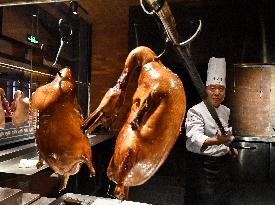
B Wu Yubo takes roasted ducks out of an oven at the Hepingmen store of Quanjude in Beijing, capital of China, March 13, 2025. Peking Duck, a representative cuisine of Beijing, has won popularity across the world for its golden, crispy skin and juicy, flavorful meat. Set up by Yang Quanren in 1864 in Beijing, "Quanjude", a time-honored brand for Peking duck, has become a must-go for visitors from both home and abroad. In 2008, Quanjude's craft of making Peking Duck was listed in the second batch of national intangible cultural heritages. The cooking craft of Peking Duck, which has been passed down for seven generations in Quanjude, is mainly used in two steps, preparation and roasting. To ensure the quality of its duck, Quanjude only chooses a type of local ducks which are fed and raised in a special way so that the proportion of the fat in the duck meat is strictly under control. During the roasting procedure, Quanjude uses wood from hard fruit trees and open fire to get a better taste. Meanwhile, the chef wi

  •  
Preserving Tradition And Innovating Duck Culture - Bejing

Preserving Tradition And Innovating Duck Culture - Bejing

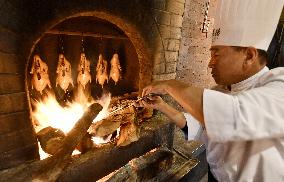
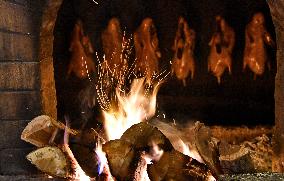
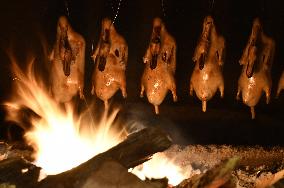
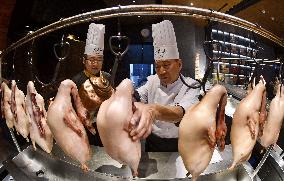
B Ducks are being roasted in an oven at the Hepingmen store of Quanjude in Beijing, capital of China, March 13, 2025. Peking Duck, a representative cuisine of Beijing, has won popularity across the world for its golden, crispy skin and juicy, flavorful meat. Set up by Yang Quanren in 1864 in Beijing, "Quanjude", a time-honored brand for Peking duck, has become a must-go for visitors from both home and abroad. In 2008, Quanjude's craft of making Peking Duck was listed in the second batch of national intangible cultural heritages. The cooking craft of Peking Duck, which has been passed down for seven generations in Quanjude, is mainly used in two steps, preparation and roasting. To ensure the quality of its duck, Quanjude only chooses a type of local ducks which are fed and raised in a special way so that the proportion of the fat in the duck meat is strictly under control. During the roasting procedure, Quanjude uses wood from hard fruit trees and open fire to get a better taste. Meanwhile, the chef will also

  •  
Preserving Tradition And Innovating Duck Culture - Bejing

Preserving Tradition And Innovating Duck Culture - Bejing

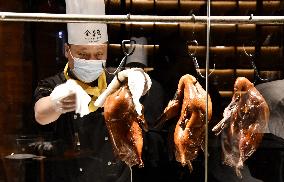
B A chef prepares to slice a roasted duck at the Hepingmen store of Quanjude in Beijing, capital of China, March 13, 2025. Peking Duck, a representative cuisine of Beijing, has won popularity across the world for its golden, crispy skin and juicy, flavorful meat. Set up by Yang Quanren in 1864 in Beijing, "Quanjude", a time-honored brand for Peking duck, has become a must-go for visitors from both home and abroad. In 2008, Quanjude's craft of making Peking Duck was listed in the second batch of national intangible cultural heritages. The cooking craft of Peking Duck, which has been passed down for seven generations in Quanjude, is mainly used in two steps, preparation and roasting. To ensure the quality of its duck, Quanjude only chooses a type of local ducks which are fed and raised in a special way so that the proportion of the fat in the duck meat is strictly under control. During the roasting procedure, Quanjude uses wood from hard fruit trees and open fire to get a better taste. Meanwhile, the chef will

  •  
Preserving Tradition And Innovating Duck Culture - Bejing

Preserving Tradition And Innovating Duck Culture - Bejing

B Ducks are being roasted in an oven at the Hepingmen store of Quanjude in Beijing, capital of China, March 13, 2025. Peking Duck, a representative cuisine of Beijing, has won popularity across the world for its golden, crispy skin and juicy, flavorful meat. Set up by Yang Quanren in 1864 in Beijing, "Quanjude", a time-honored brand for Peking duck, has become a must-go for visitors from both home and abroad. In 2008, Quanjude's craft of making Peking Duck was listed in the second batch of national intangible cultural heritages. The cooking craft of Peking Duck, which has been passed down for seven generations in Quanjude, is mainly used in two steps, preparation and roasting. To ensure the quality of its duck, Quanjude only chooses a type of local ducks which are fed and raised in a special way so that the proportion of the fat in the duck meat is strictly under control. During the roasting procedure, Quanjude uses wood from hard fruit trees and open fire to get a better taste. Meanwhile, the chef will also

  •  
Preserving Tradition And Innovating Duck Culture - Bejing

Preserving Tradition And Innovating Duck Culture - Bejing

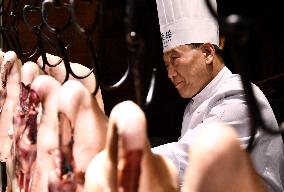
B Wu Yubo checks the prepared duck at the Hepingmen store of Quanjude in Beijing, capital of China, March 13, 2025. Peking Duck, a representative cuisine of Beijing, has won popularity across the world for its golden, crispy skin and juicy, flavorful meat. Set up by Yang Quanren in 1864 in Beijing, "Quanjude", a time-honored brand for Peking duck, has become a must-go for visitors from both home and abroad. In 2008, Quanjude's craft of making Peking Duck was listed in the second batch of national intangible cultural heritages. The cooking craft of Peking Duck, which has been passed down for seven generations in Quanjude, is mainly used in two steps, preparation and roasting. To ensure the quality of its duck, Quanjude only chooses a type of local ducks which are fed and raised in a special way so that the proportion of the fat in the duck meat is strictly under control. During the roasting procedure, Quanjude uses wood from hard fruit trees and open fire to get a better taste. Meanwhile, the chef will also us

  •  
Preserving Tradition And Innovating Duck Culture - Bejing

Preserving Tradition And Innovating Duck Culture - Bejing

B Customers look at cultural creative products of Quanjude at one of its experience stores on the Qianmen Street in Beijing, capital of China, March 25, 2025. Peking Duck, a representative cuisine of Beijing, has won popularity across the world for its golden, crispy skin and juicy, flavorful meat. Set up by Yang Quanren in 1864 in Beijing, "Quanjude", a time-honored brand for Peking duck, has become a must-go for visitors from both home and abroad. In 2008, Quanjude's craft of making Peking Duck was listed in the second batch of national intangible cultural heritages. The cooking craft of Peking Duck, which has been passed down for seven generations in Quanjude, is mainly used in two steps, preparation and roasting. To ensure the quality of its duck, Quanjude only chooses a type of local ducks which are fed and raised in a special way so that the proportion of the fat in the duck meat is strictly under control. During the roasting procedure, Quanjude uses wood from hard fruit trees and open fire to get a bet

  •  
Preserving Tradition And Innovating Duck Culture - Bejing

Preserving Tradition And Innovating Duck Culture - Bejing

B Wu Yubo shows how to slice a duck at the Hepingmen store of Quanjude in Beijing, capital of China, March 13, 2025. Peking Duck, a representative cuisine of Beijing, has won popularity across the world for its golden, crispy skin and juicy, flavorful meat. Set up by Yang Quanren in 1864 in Beijing, "Quanjude", a time-honored brand for Peking duck, has become a must-go for visitors from both home and abroad. In 2008, Quanjude's craft of making Peking Duck was listed in the second batch of national intangible cultural heritages. The cooking craft of Peking Duck, which has been passed down for seven generations in Quanjude, is mainly used in two steps, preparation and roasting. To ensure the quality of its duck, Quanjude only chooses a type of local ducks which are fed and raised in a special way so that the proportion of the fat in the duck meat is strictly under control. During the roasting procedure, Quanjude uses wood from hard fruit trees and open fire to get a better taste. Meanwhile, the chef will also u

  •  
Preserving Tradition And Innovating Duck Culture - Bejing

Preserving Tradition And Innovating Duck Culture - Bejing

B This undated file photo shows a foreign tourist experiencing the making of Peking Duck at the Hepingmen store of Quanjude in Beijing, capital of China. Peking Duck, a representative cuisine of Beijing, has won popularity across the world for its golden, crispy skin and juicy, flavorful meat. Set up by Yang Quanren in 1864 in Beijing, "Quanjude", a time-honored brand for Peking duck, has become a must-go for visitors from both home and abroad. In 2008, Quanjude's craft of making Peking Duck was listed in the second batch of national intangible cultural heritages. The cooking craft of Peking Duck, which has been passed down for seven generations in Quanjude, is mainly used in two steps, preparation and roasting. To ensure the quality of its duck, Quanjude only chooses a type of local ducks which are fed and raised in a special way so that the proportion of the fat in the duck meat is strictly under control. During the roasting procedure, Quanjude uses wood from hard fruit trees and open fire to get a better t

  •  
Preserving Tradition And Innovating Duck Culture - Bejing

Preserving Tradition And Innovating Duck Culture - Bejing

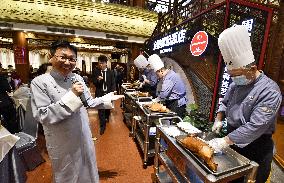
B A staff member introduces the history of Quanjude to customers at its first-ever store on the Qianmen Street in Beijing, capital of China, March 25, 2025. Peking Duck, a representative cuisine of Beijing, has won popularity across the world for its golden, crispy skin and juicy, flavorful meat. Set up by Yang Quanren in 1864 in Beijing, "Quanjude", a time-honored brand for Peking duck, has become a must-go for visitors from both home and abroad. In 2008, Quanjude's craft of making Peking Duck was listed in the second batch of national intangible cultural heritages. The cooking craft of Peking Duck, which has been passed down for seven generations in Quanjude, is mainly used in two steps, preparation and roasting. To ensure the quality of its duck, Quanjude only chooses a type of local ducks which are fed and raised in a special way so that the proportion of the fat in the duck meat is strictly under control. During the roasting procedure, Quanjude uses wood from hard fruit trees and open fire to get a bette

  •  
Preserving Tradition And Innovating Duck Culture - Bejing

Preserving Tradition And Innovating Duck Culture - Bejing

B Wu Yubo checks a roasted duck at the Hepingmen store of Quanjude in Beijing, capital of China, March 13, 2025. Peking Duck, a representative cuisine of Beijing, has won popularity across the world for its golden, crispy skin and juicy, flavorful meat. Set up by Yang Quanren in 1864 in Beijing, "Quanjude", a time-honored brand for Peking duck, has become a must-go for visitors from both home and abroad. In 2008, Quanjude's craft of making Peking Duck was listed in the second batch of national intangible cultural heritages. The cooking craft of Peking Duck, which has been passed down for seven generations in Quanjude, is mainly used in two steps, preparation and roasting. To ensure the quality of its duck, Quanjude only chooses a type of local ducks which are fed and raised in a special way so that the proportion of the fat in the duck meat is strictly under control. During the roasting procedure, Quanjude uses wood from hard fruit trees and open fire to get a better taste. Meanwhile, the chef will also use a

  •  
Preserving Tradition And Innovating Duck Culture - Bejing

Preserving Tradition And Innovating Duck Culture - Bejing

B A plate of sliced Peking Duck is displayed at the Hepingmen store of Quanjude in Beijing, capital of China, March 13, 2025. Peking Duck, a representative cuisine of Beijing, has won popularity across the world for its golden, crispy skin and juicy, flavorful meat. Set up by Yang Quanren in 1864 in Beijing, "Quanjude", a time-honored brand for Peking duck, has become a must-go for visitors from both home and abroad. In 2008, Quanjude's craft of making Peking Duck was listed in the second batch of national intangible cultural heritages. The cooking craft of Peking Duck, which has been passed down for seven generations in Quanjude, is mainly used in two steps, preparation and roasting. To ensure the quality of its duck, Quanjude only chooses a type of local ducks which are fed and raised in a special way so that the proportion of the fat in the duck meat is strictly under control. During the roasting procedure, Quanjude uses wood from hard fruit trees and open fire to get a better taste. Meanwhile, the chef wi

  •  
Preserving Tradition And Innovating Duck Culture - Bejing

Preserving Tradition And Innovating Duck Culture - Bejing

B Wu Yubo (R) teaches his apprentice at the Hepingmen store of Quanjude in Beijing, capital of China, March 13, 2025. Peking Duck, a representative cuisine of Beijing, has won popularity across the world for its golden, crispy skin and juicy, flavorful meat. Set up by Yang Quanren in 1864 in Beijing, "Quanjude", a time-honored brand for Peking duck, has become a must-go for visitors from both home and abroad. In 2008, Quanjude's craft of making Peking Duck was listed in the second batch of national intangible cultural heritages. The cooking craft of Peking Duck, which has been passed down for seven generations in Quanjude, is mainly used in two steps, preparation and roasting. To ensure the quality of its duck, Quanjude only chooses a type of local ducks which are fed and raised in a special way so that the proportion of the fat in the duck meat is strictly under control. During the roasting procedure, Quanjude uses wood from hard fruit trees and open fire to get a better taste. Meanwhile, the chef will also

  •  
An Ecological Shelterbelt Along The Heihe River in Zhangye

An Ecological Shelterbelt Along The Heihe River in Zhangye

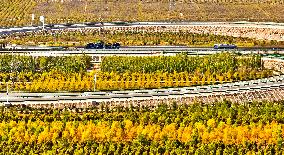
ZHANGYE, CHINA - OCTOBER 6, 2024 - Trucks run on a highway along ecological shelterbelts along the Heihe River in Zhangye city, Northwest China's Gansu province, Oct 6, 2024. On both sides of the train, golden poplar, red leaf maple trees and farmers are drying seed corn constitute the autumn scenery.

  •  
An Ecological Shelterbelt Along The Heihe River in Zhangye

An Ecological Shelterbelt Along The Heihe River in Zhangye

ZHANGYE, CHINA - OCTOBER 6, 2024 - Trucks run on a highway along ecological shelterbelts along the Heihe River in Zhangye city, Northwest China's Gansu province, Oct 6, 2024. On both sides of the train, golden poplar, red leaf maple trees and farmers are drying seed corn constitute the autumn scenery.

  •  
An Ecological Shelterbelt Along The Heihe River in Zhangye

An Ecological Shelterbelt Along The Heihe River in Zhangye

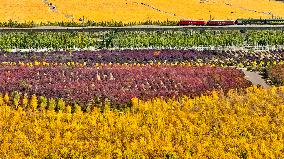
ZHANGYE, CHINA - OCTOBER 6, 2024 - Trucks run on a highway along ecological shelterbelts along the Heihe River in Zhangye city, Northwest China's Gansu province, Oct 6, 2024. On both sides of the train, golden poplar, red leaf maple trees and farmers are drying seed corn constitute the autumn scenery.

  •  
An Ecological Shelterbelt Along The Heihe River in Zhangye

An Ecological Shelterbelt Along The Heihe River in Zhangye

ZHANGYE, CHINA - OCTOBER 6, 2024 - Trucks run on a highway along ecological shelterbelts along the Heihe River in Zhangye city, Northwest China's Gansu province, Oct 6, 2024. On both sides of the train, golden poplar, red leaf maple trees and farmers are drying seed corn constitute the autumn scenery.

  •  
An Ecological Shelterbelt Along The Heihe River in Zhangye

An Ecological Shelterbelt Along The Heihe River in Zhangye

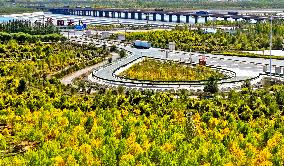
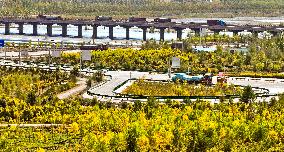
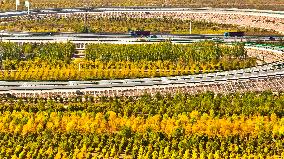
ZHANGYE, CHINA - OCTOBER 6, 2024 - A train runs over a viaduct in an ecological shelterbelt along the Heihe River in Zhangye city, Northwest China's Gansu province, Oct 6, 2024. On both sides of the train, golden poplar, red leaf maple trees and farmers are drying seed corn constitute the autumn scenery.

  •  
Glover Garden in Nagasaki lit up

Glover Garden in Nagasaki lit up

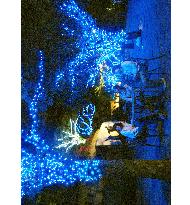
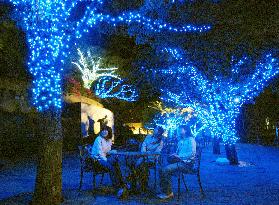
NAGASAKI, Japan - Trees at the Glover Garden, a famous tourist spot in Nagasaki, have been illuminated with white and blue light-emitting diodes. The illumination will be offered during the Golden Week holiday in May and during summer holidays.

  •  

Qinling golden monkeys feast on flowers in spring

STORY: Qinling golden monkeys feast on flowers in spring DATELINE: April 6, 2022 LENGTH: 00:01:45 LOCATION: XI'AN, China CATEGORY: ENVIRONMENT SHOTLIST: 1. various of monkeys feasting on flowers STORYLINE: Qinling golden monkeys were spotted feasting on flowers at a rare wildlife rescue base in Xi'an, the capital of northwest China's Shaanxi Province. According to keepers, the food that Qinling golden monkeys enjoy changes in different seasons. In spring, they usually eat buds, leaves, and flowers. Recently, staff at the base have fed them with fresh branches of cherry trees so that the golden monkeys can eat seasonal food. The Qinling Mountains are known as China's gene bank of wildlife as it houses a huge variety of plants and wild animals such as giant pandas, golden monkeys and crested ibis. Qinling golden monkeys are under first-level protection in China. Xinhua News Agency correspondents reporting from Xi'an, China. (XHTV)

  •  
Pine trees illuminated in Kanazawa's famed Kenroku-en Garden

Pine trees illuminated in Kanazawa's famed Kenroku-en Garden

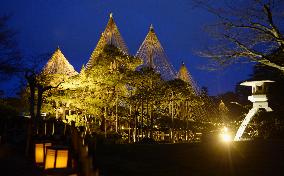
Pine trees and stone lanterns are illuminated in the Kenroku-en Garde in Kanazawa, Ishikawa Prefecture, eastern Japan, on the evening of Feb. 6, 2015, on a trial basis in preparation for an annual nightly lighting event later in the month. The pine trees and lanterns lit in golden color contrast sharply with the pitch dark night sky. (Kyodo) ==Kyodo

  •  
Glover Garden in Nagasaki lit up

Glover Garden in Nagasaki lit up

NAGASAKI, Japan - Trees at the Glover Garden, a famous tourist spot in Nagasaki, have been illuminated with white and blue light-emitting diodes. The illumination will be offered during the Golden Week holiday in May and during summer holidays. (Kyodo)

  •  
Kinkakuji Temple

Kinkakuji Temple

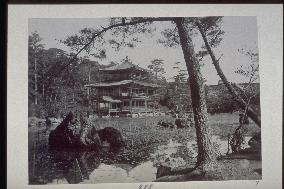
The Golden Pavilion seen from the western edge of Kyoko Pond, facing east-northeast. The rock in the left foreground is Kameyama-ishi, and the one in the centre is Akamatsu-ishi. The high roofline of the kuri (priests' quarters) is visible over the pine trees to the right. The temple was built in 1398 but destroyed by arson in 1950. Unlike the reconstructed building of today, the original roof was supported by many columns built around each level. Pine forest surrounds the pond.==Date:unknown, Place:Kyoto, Photo:unknown, (Credit:Nagasaki University Library/Kyodo News Images) [Cabinet Number51‐59‐4]

  •  
Kinkakuji Temple

Kinkakuji Temple

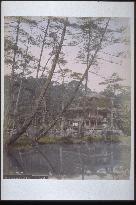
The Golden Pavilion at Rokuon-ji Temple seen over the pine trees from the western edge of Kyoko Pond, facing northeast. The temple was built in 1398 but destroyed by arson in 1950. The surface of the ground in the pine grove is covered with moss, and a stone lantern is visible.==Date:unknown, Place:Kyoto, Photo:unknown, (Credit:Nagasaki University Library/Kyodo News Images) [Cabinet Number42‐12‐0]

  •  
China Spring Country

China Spring Country

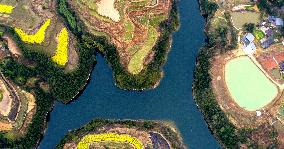
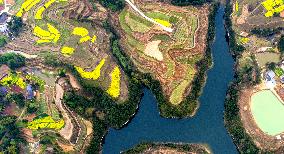
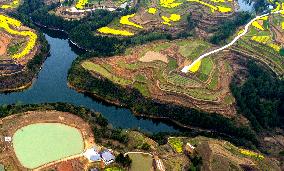
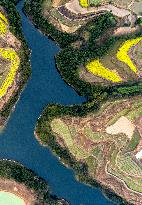
A view of a rural wetland, green water and pond, golden rape flowers, green trees in Bazhong, Sichuan Province, China. March 14, 2021.

  •  
China Spring Country

China Spring Country

A view of a rural wetland, green water and pond, golden rape flowers, green trees in Bazhong, Sichuan Province, China. March 14, 2021.

  •  
China Spring Country

China Spring Country

A view of a rural wetland, green water and pond, golden rape flowers, green trees in Bazhong, Sichuan Province, China. March 14, 2021.

  •  
China Spring Country

China Spring Country

A view of a rural wetland, green water and pond, golden rape flowers, green trees in Bazhong, Sichuan Province, China. March 14, 2021.

  •  
China Spring Country

China Spring Country

A view of a rural wetland, green water and pond, golden rape flowers, green trees in Bazhong, Sichuan Province, China. March 14, 2021.

  • Main
  • Top
  • Editorial
  • Creative
  • About Us
  • About ILG
  • Terms of use
  • Company
  • BEHIND
  • Price List
  • Single Plan
  • Monthly Plan
  • Services
  • Shooting
  • Rights Clearance
  • Support
  • FAQ
  • How To Buy
  • Contact Us
  • Become a Partner

© KYODO NEWS IMAGES INC

All Rights Reserved.

  • Editorial
  • Olympics
  • News
  • Sports
  • Japan
  • Tech
  • Royal
  • Disaster
  • NorthKorea
  • Old Japan
  • SNS
  • Creative
  • Food
  • Japan
  • Landscape
  • Animal
  • Popular
  • #Ukraine
  • #Russia
  • #coronavirus
  • #N. Korea
  • #Thailand
  • #China
  • #Ukraine
  • #Russia
  • #coronavirus
  • #N. Korea
  • #Thailand
  • #China
  • Food
  • Japan
  • Landscape
  • Animal
  • Olympics
  • News
  • Sports
  • Japan
  • Tech
  • Royal
  • Disaster
  • NorthKorea
  • Old Japan
  • SNS